
Business Management

Manager leading a hybrid team decision planning session with workflow notes on a digital board

The Manager’s 2026 Operating Rhythm for Faster Team Decisions

A manager’s 2026 operating rhythm is the repeatable cadence you use to move work from signal, to discussion, to decision, to action without dragging every choice into another meeting. When it’s designed well, your team knows where updates go, when decisions get made, who owns each call, and which issues deserve live conversation. This article gives

The Manager’s 2026 Operating Rhythm for Faster Team Decisions Read More »
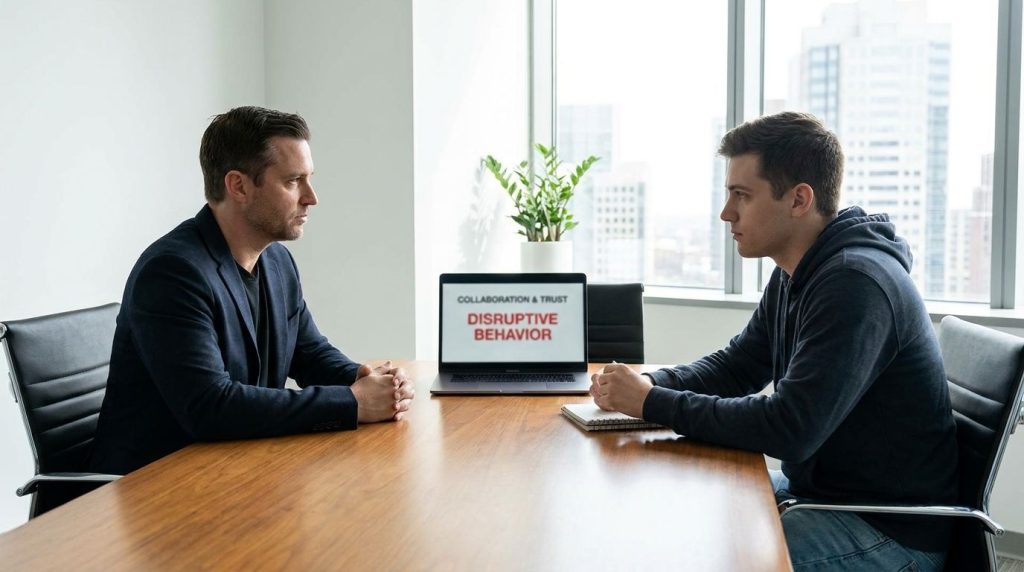
Manager addressing a toxic teammate during a tense team meeting

How to Manage the Genius Who Is a Toxic Teammate

To manage the genius who is a toxic teammate, treat the behavior as a performance problem, not a personality quirk. Define the specific damage, give direct feedback, set measurable expectations, protect the team, and act if the person does not change. A toxic high performer can look valuable when you measure only individual output, yet

How to Manage the Genius Who Is a Toxic Teammate Read More »

Manager and HR representative meeting privately with an employee to discuss a respectful termination

The Step-by-Step Guide to Firing Someone with Dignity

Firing someone with dignity means you handle a hard business decision with preparation, clarity, respect, and clean follow-through. You do not soften the decision into confusion, and you do not turn the meeting into a cold procedure that ignores the person sitting in front of you. If you manage people long enough, you will face this

The Step-by-Step Guide to Firing Someone with Dignity Read More »

Manager leading a team discussion about standards, accountability, and feedback in a workplace meeting

How to Build a Team Culture That Polices Itself

A team culture that polices itself runs on shared standards, peer accountability, and enough trust for people to correct problems before a manager has to step in. You build it by making expectations visible, feedback routine, and ownership mutual, so the team protects performance without sliding into micromanagement or social friction. If you want a team

How to Build a Team Culture That Polices Itself Read More »

HR manager reviewing employee feedback platform survey results with team members in a modern office

Top 5 Employee Feedback Platforms That Aren’t Anonymous Suggestion Boxes

Employee feedback platforms work best when they replace vague comment drop boxes with structured listening, recurring pulse surveys, manager follow-through, and clear confidentiality rules. If you want feedback that leads to action instead of a pile of anonymous complaints, the right platform matters as much as the survey itself. This guide walks you through five employee

Top 5 Employee Feedback Platforms That Aren’t Anonymous Suggestion Boxes Read More »

Manager in a one-on-one meeting calmly receiving direct feedback from an employee.

Stop Asking for “Radical Candor” If You Can’t Handle the Truth

Radical Candor only works when you invite truth in both directions, then stay steady when it shows up. If “candor” means you get to speak freely but others must stay agreeable, you are not building a high-performing team, you are building silence. This guide gives you a practical way to ask for honest feedback, deliver

Stop Asking for “Radical Candor” If You Can’t Handle the Truth Read More »

Manager in a 1:1 meeting with an employee reviewing goals to re-engage a bored team and prevent boreout

Your Team Isn’t Burnt Out, They’re Bored

If your team’s output is “fine” but energy, ownership, and curiosity are fading, boredom is often the root cause, not burnout. You’re seeing underload, low meaning, and stalled growth show up as disengagement, quiet withdrawal, and “minimum viable effort.” This article gives you a field-tested way to tell boredom from burnout, then fix it without piling

Your Team Isn’t Burnt Out, They’re Bored Read More »

Business leaders reviewing performance dashboards and analytics

Data-Driven Decision Making: A Guide for Business Leaders

Data-driven decision making allows you to replace assumptions with evidence, reduce execution risk, and improve consistency across strategic and operational choices. When leadership decisions rely on validated data, organizations gain sharper focus, faster alignment, and stronger performance control. This guide shows you how senior leaders apply data to guide strategy, allocate resources, manage performance, and

Data-Driven Decision Making: A Guide for Business Leaders Read More »

Manager having a focused one-on-one conversation with an employee in a professional office

The Manager’s Handbook for Navigating Difficult Conversations

You navigate difficult conversations as a manager by preparing facts, setting a clear purpose, managing emotions in real time, and closing with concrete agreements that protect trust and performance. Short, focused conversations handled with discipline prevent small issues from turning into morale, productivity, or retention problems. This handbook gives you a practical playbook for handling

The Manager’s Handbook for Navigating Difficult Conversations Read More »

Business leaders and teams collaborating on new ideas in a modern office

How to Foster a Culture of Innovation in Your Organization

You foster a culture of innovation by making experimentation safe, expectations clear, and execution measurable across the organization. Innovation becomes repeatable when leadership behavior, incentives, and operating systems consistently reward learning and progress. This article shows you how to build that environment deliberately. You will see how leaders shape outcomes, how teams gain confidence to

How to Foster a Culture of Innovation in Your Organization Read More »

Scroll to Top