
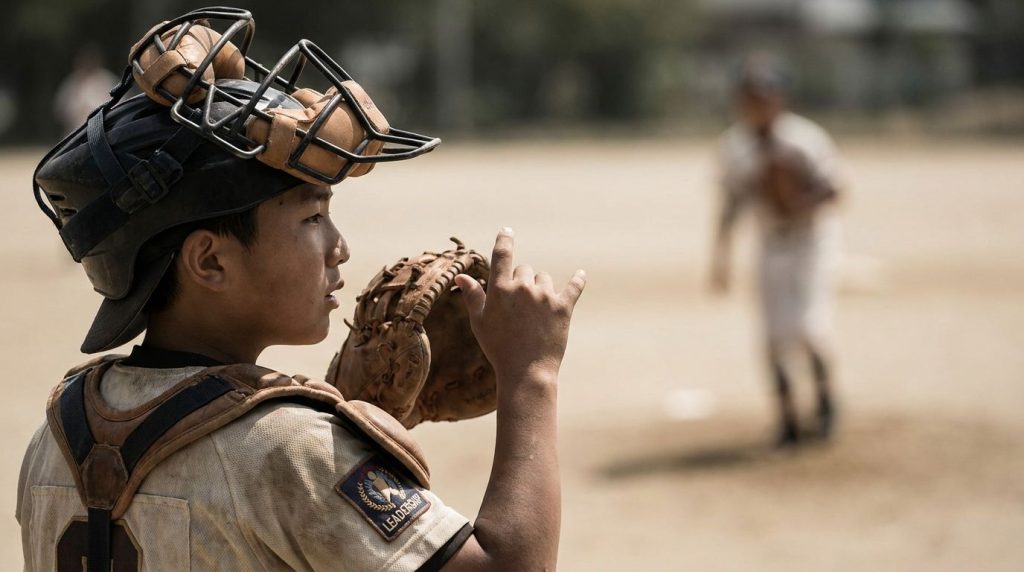
Youth catchers need leadership training, not just receiving drills, because the position directs the defense, supports the pitcher, controls tempo, and reads the whole field. Glove work matters, but a catcher who can’t communicate, reset a pitcher, or organize teammates is only learning part of the job.
If you coach, parent, or train a young catcher, the question isn’t whether receiving, blocking, and throwing matter. They do. The better question is whether your practice plan also builds the communication, awareness, and decision-making that turn a catcher into a field leader.
How Can You Teach A Young Catcher To Be A Leader?
You teach a young catcher to lead by giving leadership the same structure you give receiving drills: clear expectations, repeated reps, and feedback. Don’t wait for confidence to appear on its own; build it through small, repeatable actions.
Start with simple language the catcher can use every inning. A young player doesn’t need a speech. They need short commands: “One pitch,” “Ball to me,” “Two outs,” “Runner going,” and “Settle in.” Those phrases create a role the catcher can understand without feeling like they’re performing for adults.
Then measure leadership in visible behaviors. Did the catcher talk before the pitch? Did they remind the defense of the outs? Did they walk to the mound when the pitcher lost rhythm? Did they use calm body language after a mistake? Those actions are coachable, and they let a quiet catcher grow without being pushed into a personality that doesn’t fit.
Leadership training works best when it’s tied to baseball tasks. A catcher can learn to point a teammate into position, review the count, give the pitcher a target, and reset after a passed ball. That’s not extra work. That’s catching.
Why Is The Catcher Called The Field General?
The catcher is called the field general because they face the entire field and can see alignments, runners, defensive gaps, and pitcher body language from one spot. That view gives the catcher a natural responsibility to organize the game.
Little League International’s catching education describes the catcher as the player who can see the whole field and must learn to anticipate plays, position fielders, and use their voice. That fits what coaches see every weekend. The catcher knows when the shortstop is shaded too far, when the runner at first base is getting a bigger lead, and when the pitcher is rushing.
A youth catcher doesn’t need to control every detail. They need to develop awareness one layer at a time. At younger ages, that may mean calling out the number of outs and reminding teammates where the play is. As the player grows, it can expand into pitch-calling logic, runner control, and game tempo.
The field general label can sound big for a ten-year-old. Use it as a teaching tool, not a burden. The message should be: “You see the field better than anyone else, so your voice helps your teammates play faster.”
Are Receiving Drills Enough For Youth Catcher Development?
Receiving drills are necessary, but they’re not enough for youth catcher development. A catcher can present pitches well and still struggle to lead a pitcher, manage pressure, or direct the defense.
Receiving is attractive to train because it’s easy to see. A coach can watch glove movement, target position, exchange time, and blocking form. Leadership is harder to grade at first glance, so it often gets pushed aside. That’s how players end up with polished mechanics and poor game presence.
The American Baseball Coaches Association(ABCA) has emphasized that the catcher’s role as a field general matters alongside receiving. That distinction is useful for youth coaches. If practice time goes only to stance, receiving, blocking, and throwing, the catcher gets better at skills that happen after the pitcher starts the play. Leadership training teaches the catcher what to do before the pitch and between pitches.
There’s also a practical reason to balance the work. Youth pitchers often need rhythm, reassurance, and reminders. A catcher who gives a steady target, speaks with purpose, and keeps the pace under control can help the pitcher compete with less panic. That can change an inning before a mechanical adjustment ever enters the conversation.
What Leadership Skills Do Youth Catchers Need?
Youth catchers need clear communication, field awareness, emotional control, pitch understanding, and dependable body language. Those skills make the catcher more useful between pitches, not only during the pitch.
Communication is the starting point. Teach your catcher to speak early, speak loud enough, and use short baseball language. Long instructions rarely help in a game. A catcher who says “Two outs, play is at one” gives teammates faster information than one who waits for a coach to repeat it from the dugout.
Field awareness comes after that. The catcher should learn to scan runners, count outs, check defensive depth, and know where the next throw should go. You can train this during batting practice, bullpen sessions, and controlled scrimmages. Ask the catcher, “Where’s the play?” before the pitch, then let them answer out loud.
Emotional control may be the most overlooked skill. Pitchers miss spots, umpires miss calls, fielders make errors, and catchers get crossed up. A catcher’s body language can calm the field or feed the tension. Teach the player to reset with a breath, return the ball with purpose, and give the pitcher a simple cue before the next pitch.
How Do You Build Catcher Communication Without Creating Pressure?
You build catcher communication without creating pressure by starting with scripted phrases and low-risk situations. The goal is to make speaking feel like part of the position, not a personality test.
Begin in practice, not in the middle of a tight game. Give the catcher three required phrases for the day. One phrase before the pitch, one phrase after a missed pitch, and one phrase with runners on base. Keep the wording simple so the player can focus on timing and tone.
You can also use short communication drills that fit into normal work:
- Vocal Countdown Drill: The catcher calls the count, outs, and play location before each pitch.
- Post-Pitch Reset: After every miss, the catcher gives one calm cue before returning the ball.
- Runner Scan: Before the pitch, the catcher checks runners and announces the most likely play.
- Defense Check: The catcher confirms where teammates should throw the ball on contact.
Correct the behavior, not the child’s confidence. Don’t say, “Be louder” ten times and expect improvement. Say, “Use your pre-pitch call before the pitcher comes set,” or “Give the pitcher one reset phrase after a walk.” Specific coaching reduces anxiety and makes the catcher feel prepared.
Should Young Catchers Learn To Call Pitches?
Young catchers should learn pitch-calling ideas before they are asked to call a full game. Start with pitch purpose, count awareness, and pitcher strengths, then increase responsibility as the player matures.
At younger ages, the catcher can learn simple categories: pitch for a strike, pitch away from contact, pitch to change speed, and pitch to set up the next throw. That gives the player a reason behind the sign. If a coach calls every pitch from the dugout without teaching the logic, the catcher becomes a messenger instead of a decision-maker.
For players around middle-school age and older, pitch-calling can become a guided partnership. Let the catcher suggest a pitch during bullpen work, then ask why. Keep the correction calm and direct. “Good idea, but the pitcher hasn’t landed that pitch today” teaches game management better than shutting the player down.
Driveline Baseball’s research brief on catcher influence connects catcher confidence and verbal feedback with improved strike-throwing in youth pitchers. That supports what many coaches notice in games: pitchers respond to catchers who look prepared and communicate with purpose. Pitch calling is part of that preparation, but it should grow through teaching, not guessing.
What Should Catcher Leadership Look Like At Each Age?
Catcher leadership should match the player’s age, maturity, and baseball knowledge. A young catcher can lead with simple reminders, and an older catcher can lead through pitch planning, pitcher management, and defensive command.
For eight-and-under and ten-and-under players, leadership means voice and awareness. Teach the catcher to call outs, give the play location, return the ball with care, and encourage the pitcher after a miss. The catcher doesn’t need advanced pitch strategy. They need the habit of being present on every pitch.
For twelve-and-under and fourteen-and-under players, add pre-pitch scanning, mound visits, runner control, and basic pitch sequencing. This is also the right stage to teach the catcher how to read a pitcher’s emotions. A player who notices frustration early can slow the game down before the inning unravels.
For older youth and high school players, leadership should become more detailed. The catcher should understand pitcher strengths, hitter timing, defensive alignments, and game pace. A National Collegiate Athletic Association(NCAA) Division I catcher survey in the research brief found that game management and communication were named as major mental demands, with many players wishing they had received more mental training earlier. That’s a strong reason to begin sooner.
How Can You Fit Leadership Training Into A Busy Practice?
You fit leadership training into a busy practice by attaching it to drills you already run. Don’t create a separate lecture; build catcher leadership into bullpens, defensive work, batting practice, and scrimmage innings.
During bullpens, require the catcher to use a target, give one cue after every miss, and review the count before each pitch. During defensive reps, make the catcher announce the play before the ball is hit. During batting practice, ask the catcher to scan the field and name the throw. These changes add seconds, not minutes.
You can also rotate responsibility. One day, the catcher owns pre-pitch communication. Another day, they own mound-visit timing. Another day, they own runner reminders. This keeps the training focused and prevents the player from feeling overloaded.
Feedback should be quick. Use one sentence between reps: “Good early call,” “Give it before the pitcher sets,” “Use a calmer tone,” or “Check the runner sooner.” Short feedback protects practice pace and teaches the catcher exactly what to adjust.
Why Do Catchers Need Leadership Training?
- They see the whole field.
- They guide pitchers.
- They organize defense.
- They manage game tempo.
- They build team confidence.
Build A Catcher Who Leads Between Pitches
Youth catchers need leadership training, not just receiving drills, if you want them to grow into complete players. Receiving, blocking, and throwing give the catcher tools, but communication and awareness teach the player when and how to use them. Start small, with pre-pitch calls, pitcher reset cues, and field awareness checks. Then add pitch-calling logic and game management as the player matures. A catcher who leads between pitches gives the whole team a steadier heartbeat.
References
- USA Baseball Catching Program
- Little League University: The Catcher: Field General
- Driveline Baseball: The Catcher’s Effect On Pitching Performance
- The Athletic: Youth Baseball Catcher Framing And Leadership
- TeamSnap: Developing Leaders On The Field
- Journal Of Sport Psychology In Action: The Mental Game Of Catching
- International Review Of Sport And Exercise Psychology: Developing Leadership In Youth Sport