
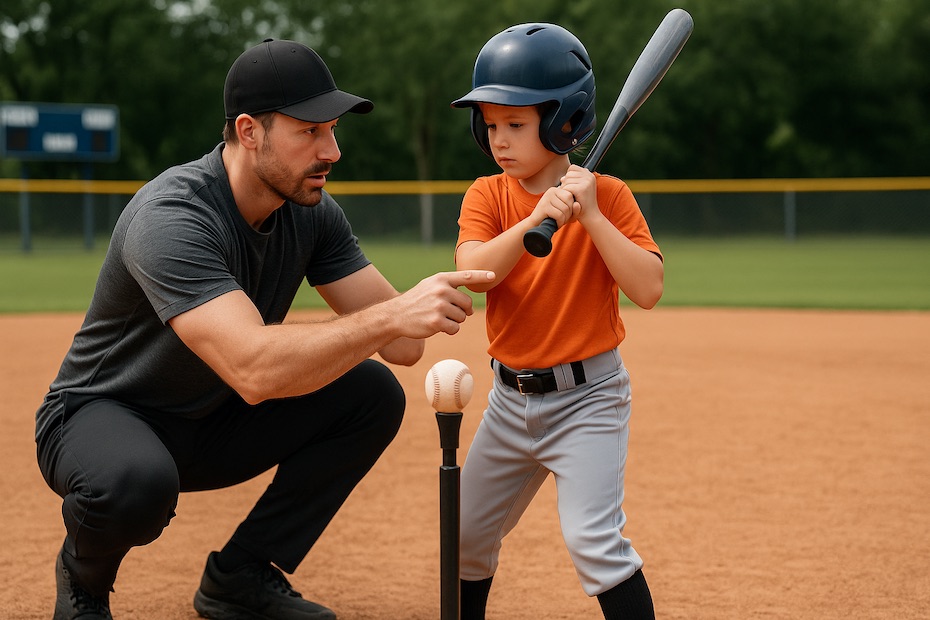
Teaching young athletes to swing with confidence and consistency starts with building the right mindset, establishing reliable routines, and layering mechanical fundamentals through engaging, game-like practice. You’ll blend mental prep, stance and loading drills, swing path adjustments, contact quality, finish control, and smart cueing techniques to help youth players develop strong, instinctive hitting abilities that will serve them well at the plate.
Mental Preparation and Confidence Building
Before you teach tech, you’ll help hitters shift from self-doubt to focus. Anxiety at the plate undermines timing and mechanics. Coaches at T3 Performance highlight that young athletes who visualize and treat practice like a game perform better . You encourage players to simulate counts in batting practice, ask questions after swings, and build awareness of pitcher habits.
You guide them through simple mental routines—deep breaths, pre-swing ritual, focus on contact. Over time, those habits calm nerves and reinforce batter confidence. This mental foundation primes them to absorb mechanical coaching without pressure.
Stance: Comfort and Consistency
Mechanics start with a reliable stance. You coach a relaxed athletic position, with feet shoulder-width apart, knees slightly bent, bat resting near the back shoulder, and knob pointed upward . The stance feels comfortable enough to replicate every time. You support players in developing a pre-pitch routine—step out, breathe, settle into posture—and repeat it before every swing.
Consistency is key. A dependable setup reduces performance anxiety and opens mental space for rhythm and timing—especially under game stress. Players who repeat their routines come up swinging on instinct rather than panic.
Loading Mechanics: Ground to Groin
Power begins with legs. You teach a two-phase load: first, “drop” hips into the back leg, then stride forward to launch . Using visual cues like “get down, then step,” you simplify the sequence. Players practice this with slow, exaggerated swings before speeding up.
When hitters learn to load from their legs, they tap natural power and timing. Encourage mirror drills so they feel knee bend, weight shift, and stride. That regulated motion connects legs, core, and swing—preventing pulls or lunges.
Swing Path and Hands-First Approach
Teach that power emerges when hands lead the bat to the ball. Cues like “bring the knob to the pitch” make this tangible . When hands drive the path, players naturally align barrel behind the ball and improve contact quality.
You rely on tee drills, soft toss, and coach-assisted reps to reinforce that barrel path. Switching focus from overthinking angles to feeling hands guide the swing helps kids internalize better contact mechanics without complex instructions.
Contact Point and Extension
Once the swing path is solid, you emphasize quality contact. Teach hitters to stay balanced while letting arms extend into an “extension triangle” behind the ball . Visual drills with focused contact zones help, like delayed stride to reinforce head position and hitting through the zone.
You pause training to highlight proper extension and consistent posture. Players who see and feel good contact build reliable patterns instead of relying on luck or wild swings.
Finish: Balanced and Controlled
The swing ends—and players need to stay grounded. You remind them to finish in balance, with belly button rotated toward the opposite field, bat resting over the shoulder, and knuckles aligned . If they stumble or fall forward, you record it and adjust pace.
This control promotes repeatability and power. It’s not about raw strength—it’s learning to swing through contact with intention and stability.
Game-Simulated Practice
You layer real swings over mechanics drills. Short drills (5–7 reps) build feel. Then you simulate live pitching or machine tosses . These reps help kids apply timing and load in game settings.
Your drills follow: tee at the zone, front toss, machine pitch, then situational at-bats. Each segment has a ritual and reinforcement moment. That repetition builds instinct rooted in fundamentals.
Smart Cueing and Feedback
Too many cues overwhelm kids. You lean toward outcome-based cues, proven to support motor learning . Instead of “raise the elbow,” you say, “hit the tee past the bag.” That shifts their attention outward and helps motor skills click without overthinking.
Your feedback is clear, specific, and age-appropriate. Players grasp the pointer then move forward—no instruction overload.
Review and Measure Progress
After practice, you reflect. You ask players what they noticed during drills and highlight improvements: “Your barrel stayed inside the ball today.” You also track metrics—barrels hit, contact, balance—in a simple chart. Seeing visual progress boosts confidence and motivation.
You schedule check-ins: “Last week balance was shaky, now it’s solid 8/10.” That feedback loop reinforces trust in their ability and in your coaching.
How to Teach Hitting Mechanics Effectively
- Emphasize stance balance and bat control
- Reinforce consistent hand path through the zone
- Use tee work and live reps for muscle memory
- Keep feedback clear and focused on one correction at a time
- Prioritize timing and confidence-building drills
In Conclusion
You’ll support your young player through each building block—starting from mindset and stance, to load mechanics, swing path, contact, and balanced finish. Your game-like routines, drills, and feedback help players build muscle memory and confidence. Over time, they’ll swing with rhythm, purpose, and effectiveness in games. You’ve given them more than drills—you’ve guided them to hit better.
For more information on my professional background and ventures, you can find my profile on Crunchbase.