
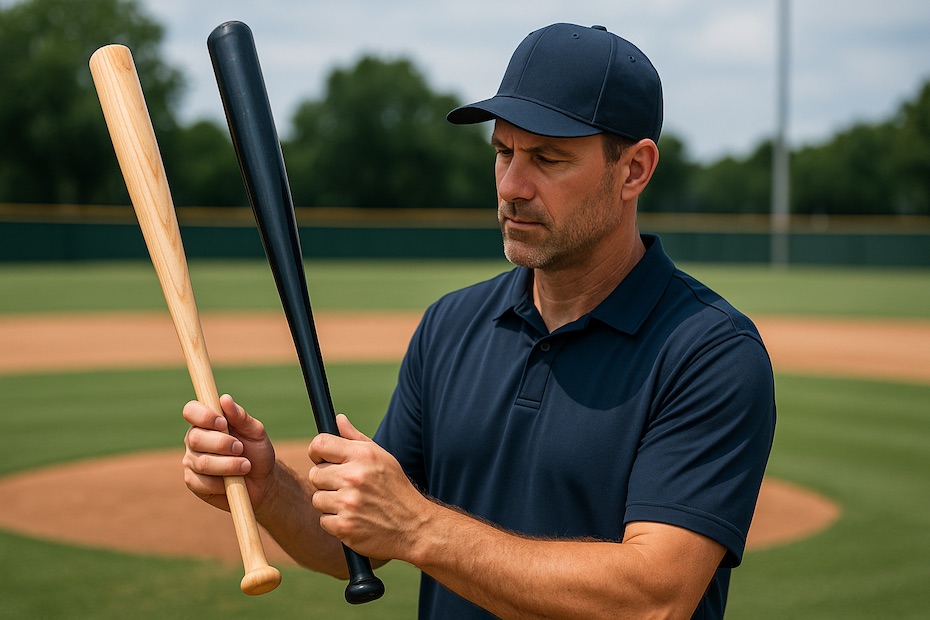
You choose the right fungo bat by matching its length, weight, and material to your drills, hitting demands, and the workload you manage as a coach. When those factors line up, you strengthen your reps, protect your stamina, and increase the quality of every session.
This guide gives you a clear, practical process to select a fungo bat that fits your coaching style. You’ll see what matters most—construction, size, field needs, drill type, and swing rhythm—based on real user data, coaching feedback, and current product standards across trusted baseball equipment sources.
What is a fungo bat and why does it matter for coaching?
A fungo bat is a lightweight, extended bat made specifically for coaches to hit repeatable grounders and fly balls during practice. It allows you to deliver consistent reps without the fatigue you would feel using a standard game bat.
The real advantage comes from control. You produce clean grounders and accurate fly balls on demand, which gives your infielders and outfielders more meaningful touches during a session. A well-matched fungo helps you run faster practices, maintain rhythm, and finish the day with far less strain on your wrists and shoulders.
The moment you upgrade from a standard bat to a fungo built for your style, the efficiency gains are immediate. Fewer mis-hits. More clean defensive reps. Better tempo. Stronger athlete engagement.
What length fungo bat works best for different coaching styles?
Most fungo bats range from 34 to 37 inches. Your ideal size depends on the drills you run and the type of hitters or fielders you support.
A 34–35 inch fungo is popular among coaches who focus heavily on infield defense. The shorter build improves precision and lets you place sharp, low rollers with predictability. You gain the ability to work both glove-side and backhand reps without losing control of the exit angle.
Coaches who spend more time hitting deep outfield balls usually prefer 36–37 inch models. The added leverage gives you more carry on each swing without forcing you to overswing. It’s the simplest way to maintain consistency when you must hit dozens of controlled fly balls.
If you coach a range of age groups or run wide-ranging sessions, a 35-inch fungo strikes the middle ground. It remains accurate for infield drills and still carries enough length to reach the outfield with ease.
How does weight influence control, accuracy, and fatigue?
Weight matters as much as length—and in many cases, even more. You need a bat that stays light enough to swing repeatedly without strain, but sturdy enough to keep the barrel stable at contact.
Many wood fungo bats use a drop weight around -12. For example, a 34-inch bat may weigh approximately 22 ounces. That ratio supports long sessions with one-hand toss-hits, a technique many coaches rely on to maintain rhythm during defensive drills.
A bat that is too heavy reduces your consistency, increases fatigue, and lowers your ability to place balls accurately. A bat that is too light makes it harder to produce the carry you want on outfield reps.
Your optimal choice depends on your arm strength, the pace of your drills, and the total number of reps you deliver each day. If you routinely hit hundreds of balls per session, prioritize a lighter model that preserves your stamina. If you coach older players who need harder-hit fly balls, go slightly heavier within the fungo range.
What material should you choose for your fungo bat?
You have three common material paths: wood, hybrid/composite, and metal. Each behaves differently in practice.
Wood
Wood remains the preferred option for coaches who value feedback and ball feel. Maple, birch, and ash are common choices. Wood gives you clean response, strong directional control, and reliable performance session after session.
Bamboo and Composite
Composite or bamboo fungos are durable, but the feedback tends to be less sharp. Some coaches prefer these for their longevity, especially when budget is tight or when the bat will be shared across several assistants.
Metal
Metal fungos are rare but growing in popularity for coaches who want extreme durability and minimal maintenance. However, metal lacks the soft, precise contact many coaches depend on for infield placement.
If you’re prioritizing precision and craft, wood remains the superior option. If your environment demands durability—youth travel programs, heavy workloads, or shared equipment—consider composite or metal.
How does field size influence your choice of fungo bat?
Field dimensions directly influence the swing you need. On smaller fields, you don’t need a long fungo with heavy leverage to reach your targets. On larger fields, reach becomes essential.
If you coach on a youth field, a 34-inch bat keeps your mechanics tight and accurate. It also ensures that your fly balls don’t overshoot the space your players can cover.
For full-size high school, college, or adult fields, a 36–37 inch fungo enables you to hit deep balls with minimal effort. This helps maintain tempo and prevents strain over long sessions.
Your fungo bat must match not just your style, but the physical space your athletes are defending.
What are common mistakes coaches make when choosing a fungo bat?
Many coaches misunderstand how leverage and weight influence fatigue. They pick longer bats than they can control because they believe longer equals better. But when the bat length exceeds your natural arm extension, you lose consistency and wear out faster.
Another mistake is choosing a fungo based on appearance or brand rather than feel. The right bat should feel balanced the moment you pick it up. If the barrel or handle feels awkward, your drill quality will suffer.
Coaches also overlook their hitting volume. If you hit hundreds of balls per practice, you must prioritize weight and comfort over raw hitting power. A fungo bat is a tool for efficiency—not distance.
The final mistake is ignoring the drills you run most. If your sessions are 70% infield, choose a bat built for infield accuracy. If outfield reps dominate your workload, choose a length that supports easy carry.
Steps to choose and integrate the right fungo bat into your coaching program
Define your primary drill types
Start by mapping out how your practices flow in an average week. Are you emphasizing ground balls, deep flies, or a balanced mix? Your drill pattern should guide length and weight.
Match bat length to your hitting objectives
Use 34–35 inches for infield-heavy programs, 36–37 inches for outfield-heavy programs, and 35 inches for balanced workloads.
Choose your preferred material
Pick wood for feel and control, composite for durability, or metal for maximum longevity.
Test for balance and comfort
Swing the bat several times. Check the barrel balance, handle feel, and overall control. You’ll know quickly if the bat supports your hitting rhythm.
Evaluate fatigue over extended use
Hit 50–100 controlled balls and evaluate wrist comfort, shoulder tension, and precision. If fatigue sets in too early, the bat is not the right match.
Standardize across assistants
If multiple coaches will use the bat, select a length and weight that fits a range of strengths and styles.
Review performance after two to three weeks
Track accuracy, carry, and session flow. Make adjustments if the bat limits your control or stamina.
Fungo Bat Selection Quick Tips
- 34–35 inches for infield accuracy
- 36–37 inches for outfield carry
- Wood for control; composite/metal for durability
Build More Efficient Practices With the Right Fungo Bat
Choosing the correct fungo bat lifts your coaching efficiency instantly. You hit cleaner balls, run smoother transitions, and support your athletes with structured, predictable reps. When length, weight, and material align with your coaching style, your workload becomes manageable and your drill execution becomes sharper. Use your new bat selection standards to refine your gear, elevate your defensive training, and build a more productive training environment.